Patellar Luxation
Medial Patellar Luxation (MPL) in Dogs
Does your dog skip on one back leg or suddenly “hop” for a few steps? Medial patellar luxation is a common cause of intermittent lameness, especially in small breeds. This page explains what it is and how we can help.
“Luxating patella”, “trick knee”, or “floating kneecap” – these all describe the same condition.
What Is Medial Patellar Luxation?
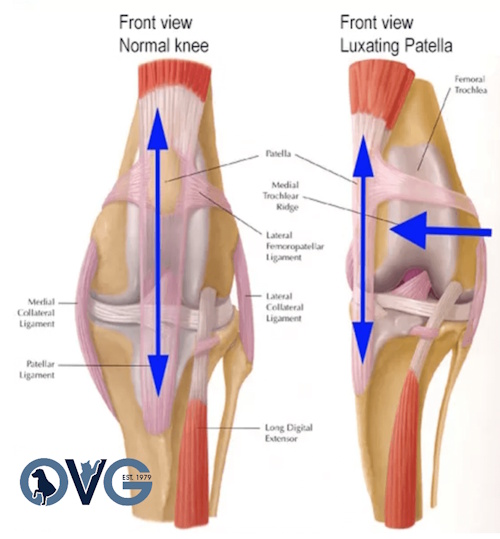
The patella (kneecap) normally sits in a groove at the front of the thigh bone (femur) and glides smoothly up and down as your dog walks or runs. In medial patellar luxation (MPL), the kneecap slips out of that groove and moves towards the inside (medial side) of the knee.
This can happen intermittently or remain permanently displaced, causing discomfort, skipping, or lameness.
Why Does It Happen?
Most MPL cases are caused by a combination of genetics and bone alignment. The groove may be too shallow, the thigh bone or shin bone may be slightly twisted, or the quadriceps muscles pull the patella out of line.
Common contributing factors include:
- Breed predisposition (e.g., Poodles, Yorkies, Chihuahuas, Pomeranians)
- Poor limb alignment or rotation of the femur/tibia
- Shallow femoral groove
- Previous trauma to the knee
Common Signs of MPL
Dogs with MPL often have intermittent lameness that comes and goes. They may skip or hop on one leg for a few steps before returning to normal walking.
Other signs can include:
- Clicking or popping sound when walking
- Bow-legged or 'knock-kneed' stance
- Difficulty jumping or climbing stairs
- Lameness that worsens over time as arthritis develops
How We Diagnose MPL
Diagnosis is usually made during an orthopaedic exam. By gently flexing and extending the knee, we can feel whether the kneecap moves out of its normal groove. X-rays help assess bone shape, groove depth, and any arthritis or deformity.
Grading the Luxation
MPL is graded on a scale from I to IV, based on severity:
- Grade I – Patella can be luxated manually but returns to normal position easily.
- Grade II – Patella occasionally pops out and can stay luxated temporarily.
- Grade III – Patella is out most of the time but can be pushed back in manually.
- Grade IV – Patella is permanently luxated and cannot be replaced manually.
Treatment Options
The right treatment depends on the severity, your dog’s age, breed, and activity level.
Conservative Management
For mild cases (Grade I or II) and small dogs with minimal lameness, we may recommend conservative care:
- Weight management
- Joint supplements
- Physiotherapy or hydrotherapy
- Controlled exercise and strengthening of the quadriceps
Surgical Correction
Moderate to severe cases (Grade II–IV) usually benefit from surgery to realign the knee and prevent further damage.
Procedures may include:
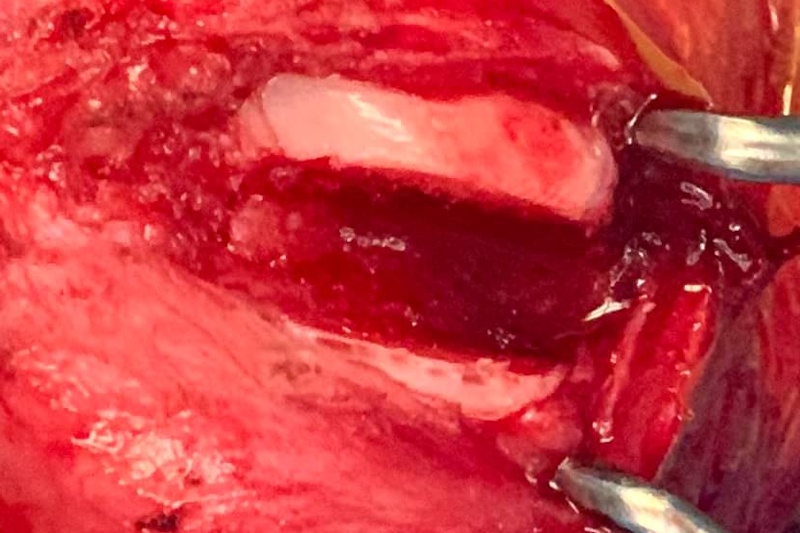
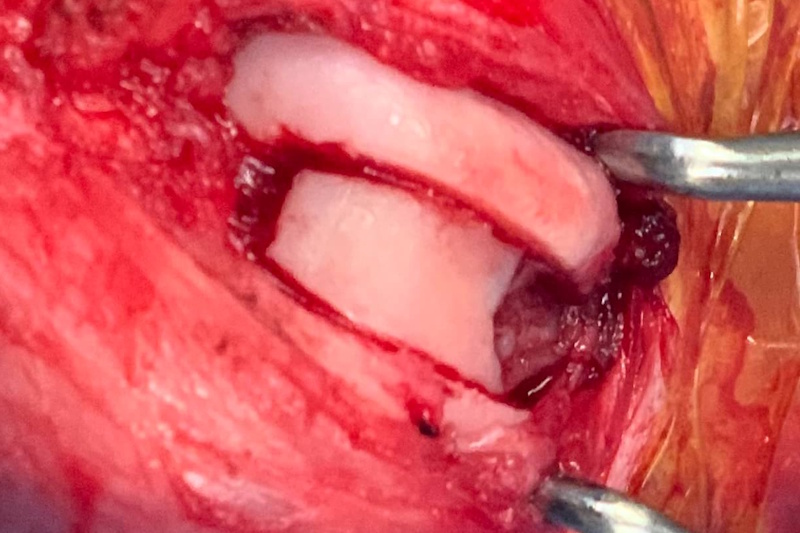
- Deepening the femoral groove (trochleoplasty)
- Moving the attachment of the patellar tendon (tibial tuberosity transposition)
- Soft tissue tightening or release around the knee
- Straightening the femur (distal femoral osteotomy)
These procedures restore the patella’s normal tracking and reduce long-term arthritis and pain.
Aftercare & Recovery
Most dogs go home the same or next day. Recovery involves strict rest for the first few weeks, followed by gradual, controlled rehabilitation to rebuild muscle strength. We’ll provide a detailed recovery plan and schedule follow-up visits to monitor healing.
Most dogs recover very well, especially with early surgery. In mild cases, full athletic activity can often resume within 8–12 weeks.
Long-Term Outlook
Surgical correction has a high success rate (over 90% of dogs improve significantly). Dogs with severe or long-standing MPL may have some residual arthritis, but pain and lameness are greatly reduced.
Without treatment, the knee can deteriorate, leading to cartilage wear, arthritis, and cruciate ligament rupture.
Surgical Treatments for Patellar Luxation
- Tibial Tuberosity Transposition
- Femoral Varus Osteotomy
- Recession Sulcoplasty
- Soft Tissue Reconstruction
Frequently Asked Questions
Answers to some of your most common questions:
Is MPL painful?
Yes. Even if your dog doesn’t yelp, the instability and arthritis that develop over time are painful.
Will my dog need both knees operated on?
Up to 30–50% of dogs have MPL in both knees. We may stage surgeries several weeks apart if both sides need correction.
Is my dog too old for MPL surgery?
Age alone isn’t a barrier – many senior dogs recover well and are more comfortable after surgery.
Can MPL cause a cruciate ligament tear?
Yes. Chronic instability from MPL can strain and eventually tear the cranial cruciate ligament.
What’s the recovery time?
Most dogs are walking comfortably within 2–4 weeks and return to full activity by 8–12 weeks.
How much does a veterinary acupuncture treatment cost?
It depends on location, practitioner, species, and disease. A typical range of fees for a single session of acupuncture will vary from $40 – $200.
Can a luxating patella heal on its own?
Unfortunately, no. The kneecap will continue to slip out of place because the underlying bone and soft tissue alignment remains the same. Mild cases may not require surgery right away, but the problem itself doesn’t “heal” without intervention.
How serious is a luxating patella?
Severity varies. Mild (Grade I–II) luxations can cause only occasional skipping, while higher grades (III–IV) can cause persistent pain, deformity, and arthritis. Over time, even mild cases can worsen if untreated.
What breeds are most affected by MPL?
MPL is most common in small and toy breeds such as Poodles, Chihuahuas, Yorkies, Pomeranians, and French Bulldogs. However, large breeds like Labradors and Border Collies can also be affected, often with more severe alignment changes.
What happens if I don’t treat my dog’s luxating patella?
Untreated MPL often leads to chronic pain, cartilage wear, and early arthritis. The constant friction and instability can also increase the risk of tearing the cranial cruciate ligament (CCL)—a more serious injury that may later require major surgery.
Is luxating patella surgery painful for my dog?
Your dog will be under general anaesthesia and receive modern pain relief before, during, and after the operation. Most patients are surprisingly comfortable within a few days, especially with good at-home care and follow-up.
How much does luxating patella surgery cost?
Costs depend on the severity, whether one or both knees are affected, and the type of correction needed. After examining your dog, we can provide a personalized estimate for your dog’s specific situation. Prices range from $4,500 to $10,000 per leg.
Can both knees be operated on at the same time?
It’s possible, especially in small dogs or when both knees are equally affected. However, many surgeons prefer to stage the surgeries 4–6 weeks apart to allow one leg to support the other during recovery.
Will the problem come back after surgery?
Recurrence is uncommon when the bone and soft tissue are properly realigned, but mild reluxation can occur in a small number of cases—especially in very active or growing dogs. Regular check-ups help ensure long-term success.
Can luxating patella come back after my dog grows?
In young dogs, skeletal growth can change limb alignment over time. If surgery is done before growth plates close, some mild shifting can recur, but it’s usually less severe. Monitoring during growth is key.
How long is recovery from patella surgery?
Most dogs are weight-bearing within a few days, walk comfortably at 2–4 weeks, and return to full activity around 8–12 weeks, depending on the grade of luxation and type of surgery.
Can physiotherapy help my dog with a luxating patella?
Yes. Strengthening the quadriceps and hip muscles helps keep the patella aligned. Physiotherapy and hydrotherapy are especially helpful after surgery to rebuild muscle and stability safely.
Is my dog too small for surgery?
No. MPL surgery is actually most common in small dogs. The techniques are refined for small-breed anatomy, and outcomes are typically excellent when performed by an experienced surgeon.
Will my dog’s limp go away after surgery?
In most cases, yes. About 90% of dogs have major improvement or complete resolution of lameness. If arthritis or muscle loss was already present, a slight residual limp can remain, but the pain and instability are usually gone.
Does a luxating patella always need surgery?
Not always. For low-grade, non-painful cases, conservative management (weight control, muscle strengthening, supplements) may keep your dog comfortable for years. We reassess regularly to see if surgery ever becomes necessary.
Can I prevent my puppy from developing a luxating patella?
While genetics play a big role, you can help by keeping your puppy lean, avoiding slippery floors and jumping from heights, and focusing on controlled exercise to develop good muscle tone during growth.
What’s the success rate for MPL surgery?
Most studies show a success rate of 90–95%, with dogs returning to a normal, pain-free life. Long-term outcomes are excellent when weight, muscle strength, and joint health are well managed afterward.